Thursday, 20 June 2013

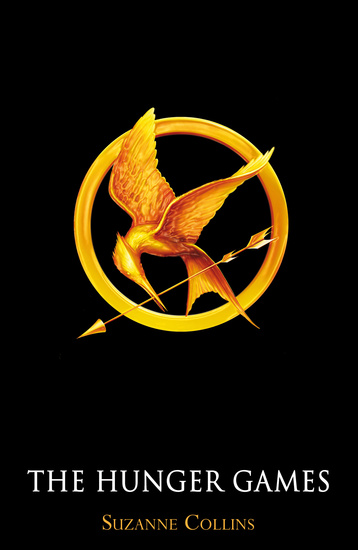
80 Books No.40: The Hunger Games by Suzanne Collins


This is the first deliberate re-read of the year (I don't count The Way Things Look to Me as there was no intention to re-read that) and for a justifiable reason beyond I just felt like it. This is a contender for being purchased as a class reader at school and I wanted to double check there was enough to do with it; my conclusion is that there is definitely a massive argument for buying it. Hoorah.

Looking back through my blog, was there ever any doubt that I'd really like The Hunger Games? It has a depressing slightly futuristic setting, is aimed at teenagers and has kids killing each other. This pretty much sums up my blog. Suffice to say that I enjoyed this as much as I did the first time around, albeit if it was marginally less page turning as I already knew how it was going to end. In fact, reading it from a teaching perspective allowed me to see a variety of new things, such as how it relates to general dystopian fiction and how it, in some ways, breaks gender stereotypes. The opening pages in particular could be an interesting exploration over when exactly we realise Katniss is female as so much of the opening presents her as fulfilling a traditionally male role within her family and within the novel.

What I also found interesting was reading this in light of having seen the film twice. I thought the film was a really good one in its own right and would happily watch it again (let's see if I'm saying this in four years time when no doubt I'll have been badgered to watch it hundreds of times by students). Given that this was a first-person narration, it managed to convey much of the same feelings without the use of a voiceover. However, Katniss is infinitely more likeable in the novel as you can really get to grips with her feelings. Also, her unwitting double crossing of Peeta (an element which I think could have been developed more across the whole trilogy) is much clearer in the novel and leaves you thinking more positively about her.

I loved this book all over again and I'm dying to teach it next year now.


PS: And hello halfway point! I'm ten days ahead of myself, which is significantly less gained time than I had back in March, but then I wasn't falling asleep on top of the books regularly in March. I'm still pretty pleased with my progress, and I still have August in which to gain time. 80 books is suddenly looking more manageable.

Sunday, 16 June 2013

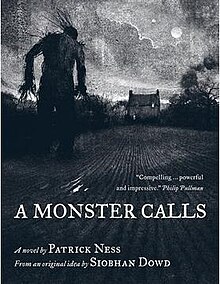
80 Books No.39: A Monster Calls by Patrick Ness


I'm usually pretty reserved on these blogs. Maybe it's because I've been writing them days and sometimes weeks after I've read them, maybe it's because most books don't knock me over sideways, maybe it's because I'm a miserable cow. However, no more. Because I'm going to be enthusiastic.

Oh dear God, this book was good. Like, could hardly put it down good and wanted to know more good and I just have to share this book with somebody GOOD.

On paper, it doesn't sound like a particularly amazing book: a boy's mum has cancer and a monster arrives in order to help him to deal with it. So far, so depressing and all-too-real version of The BFG. However, if you know anything about children's literature, just the names associated with this should get your heart racing. The original idea was Siobhan Dowd's, author of four novels and posthumous winner of the Carnegie Award. She never got a chance to write this novel; she died at the age of forty-seven of cancer. The idea though was noted down in quite a lot of detail and so her agents and publishers looked for somebody to complete it. Enter Patrick Ness, author of the Chaos Walking trilogy - which is basically a Hunger Games-esque series with a male narrator. Admittedly the trilogy did tail off somewhat, much like The Hunger Games, but the first one was absolutely amazing. Given all of this, and even given that I wasn't hugely enamoured with some of Dowd's writing, it's surprising it's taken me this long to get around to reading this one.

There is so much depth in this novel that I can't really do it justice. It's dark and truthful and a bit scary and uplifting and comforting in many different ways. It's the sort of book you don't come across very often and the sort of book that I so want my students to read. This is a definite contender for being whacked on the curriculum next year; I just need to convince other people of that!

Oh, and the illustrations in this are incredible too. Just in case you're somebody who likes pictures.

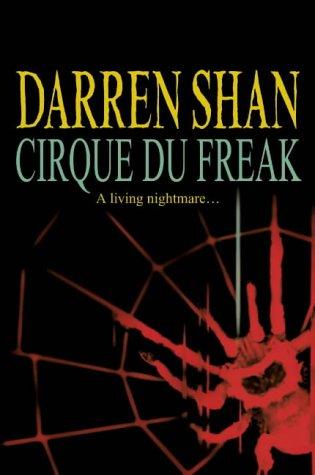
80 Books No. 38: Cirque du Freak by Darren Shan


Argh. A pet peeve of mine cropped up in this book. Two actually. One is the reason I just can't bring myself to read A Series of Unfortunate Events even though I think the film is actually quite good and an underrated family classic. The other is why I find marking kids' books such hard work at times.

But I'll come to them later.

Cirque du Freak is a book I've seen bandied around as a good class reader so as I'm embarking on spending money on new texts, it seems I should actually read some before I commit. This is reasonably short and seems popular enough (there's certainly enough sequels) so I haven't ruled it out just yet, despite the pet peeves. It does come with some reservations though.

So Pet Peeve No.1: Darren Shan is not the author's actual name. It's his pen name. And he tries to pretend he's writing his own story. That is, Darren Shan is the main character in the novel. I have no idea why this bugs me so much; I think it's just crossing that invisible line between truth and fiction, breaking the fourth wall, if you will, and it gets right up my nose.

Anyway, Darren and his friend Steve go to the Cirque du Freak (freak show/circus for those who can't work out basic French) and then it all goes quite odd. Up until then, it was actually quite a good read. Even after that, there was an enjoyment in the novel, even if there was a horrendously large spider in it and it all became quite dark towards the end. I think children would enjoy it. However, I'm not sure if it's not just too dark and strange; I can see that this would give some more sensitive kids nightmares and I'm just not willing to do that. I'm going to hand it onto a colleague and see what their verdict is.

Oh, plus Pet Peeve No.2 sort of puts me off: 'Darren Shan' full on overuses exclamation marks. It's completely unnecessary and frankly exhausting to read. When my students do it, it drives me nuts, as exclamation marks are for a purpose and to create a particular effect. If you use them all the time, it just suggests you have no idea how to actually use punctuation. And here we have a published author doing just that, and suggesting it's okay. I'm not sure I can put this in front of my students and maintain any sense of integrity.

80 Books No. 37: My sister lives on the mantelpiece by Annabel Pitcher


And so back into teen fiction...

Actually, I didn't know this was teen fiction when I bought it in a charity shop. I just liked the title; it sounded weird and off-beat, and I like those kinds of books. It was only when I'd read about two pages that I thought 'ah, this is aimed at teenagers'. Which, as we've seen before, is no bad thing when it comes to me.

So this particular novel explores the ever-cheerful world of being a child when.... your sister has died in a terrorist explosion and your family has imploded as a result. Teen books are super depressing. But then being a teenager can be quite depressing so at least these books don't alienate them by making them think everybody else is living the 90210 lifestyle. Some children have to grow up in the Lake District with frankly one of the most hideous teachers I've ever seen depicted in literature (not including Miss Trunchbull, but then she is pretty unbelievable. The teacher in this one is all too truthful.).

The narrator of this book is 10-year-old Jamie who won't admit that he doesn't actually miss his sister Rose. It's likely deliberate that so much of the novel is obvious to an older reader but missed by him as he is, after all, only ten. I'm being very unfair in grumbling about it, but grumble I will anyway; it's my blog.

The characters were perhaps slightly 2D - his mother deserved a massive slap, his father a slightly less harsh one cause at least he was actually there in body if not in mind. Jasmine, Rose's twin sister was, for me, the most interesting character, but then I always like reading about teenage girls cause I was one once. The bonus story told from her point of view at the end of the novel was ten times livelier for me than Jamie's narrative.

Yet despite all of this it made me cry. I've probably spoiled this story completely for anybody who really wants to read it, but I'll hold off on what actually made me cry. Suffice to say, it's not the death of Rose which upsets me, or Jamie's longing to see his mum. I'm twisted like that.

Coincidentally, a thread on TES forums named this as a book their school study and I am looking for fresh texts for Key Stage 3. However, I'll be steering clear of this one: the amount of times it uses the word 'dickhead' just opens too many cans of worms for my liking.

Wednesday, 12 June 2013

80 Books No.36: Bring Up The Bodies by Hilary Mantel


Easily the most highly regarded book (in theory) on my list this year so far. This won both the Man Booker and Costa Book of the Year in 2012, making this Mantel's second prize winner on the bounce after the first in the Cromwell series Wolf Hall. Both these books are sort of seminal in my own life and share the odd distinction of both being bought for me by my mum. Wolf Hall was a 'cheer up, you've only broken and displaced a metatarsal' present, whilst this one was a 'cheer up, you've only got a promotion' present. Both were very well received.

Bring Up The Bodies finishes exactly where Wolf Hall left off; Thomas Cromwell is staying at Wolf Hall where Henry VIII has just become acquainted with a certain Jane Seymour, whilst Anne Boleyn's popularity with the hot-headed king is starting to wane. From there, Mantel details the last six months of Anne's life and Cromwell's part in them. I've read this story time without number, mainly in Philippa Gregory novels, but also in random other ones, including some awful thing by Emily Purdy which was one of the worst books I ever had the misfortune to buy. This, however, comes at it from Cromwell's viewpoint and he is the hero of proceedings. In this respect, this novels are more political than romantic, which actually isn't such a bad thing; there isn't much romance in having your head chopped off, after all.

The vast cast of the Tudor court does make this confusing at times, but Mantel does give people quite distinctive characters to help with that. The cast list at the beginning is more useful as you read as you can check back; it means almost nothing before the story starts. Mantel's chosen style of narration is also, at times, grating, and more so than in Wolf Hall. I'm not sure why she chooses to refer to Cromwell simply as 'he' all the time, especially as it makes for awkward reading quite frequently when she has to make the distinction and write 'he, Cromwell, walks down the corridor'. Why bother?

The great advantage this novel has is the story which is better than anything anybody could make up anyway. It has everything a blockbuster should have: sex, betrayal, gossip and fights. I knew the story in some detail anyway, and yet this threw fresh light upon it; I've always assumed Mark Smeaton was tortured and yet this suggests it was perhaps ambiguous. Mantel's great strength is that she makes the reader root for Cromwell despite his frankly quite odious nature, at least as classically depicted. I'm actually sort of dreading book 3 which will detail his downfall.

A brilliant read as far as I'm concerned.

Sunday, 9 June 2013

80 Books No.35: Easter by Michael Arditti


I must have missed something with this book. Don't get me wrong, I enjoyed it, for several reasons which I'll go into more detail about below. It was a good read. I just didn't think it was 'one of the first important English novels of the century' (Literary Review) or worthy of having won the Mardi Gras and Waterstone's Book awards. Mind you, I'm becoming increasingly baffled as to why Hilary Mantel has twice won the Man Booker Prize as whilst I loved Wolf Hall and am thoroughly enjoying Bring up the Bodies, I'm not sure what she's done that's so stunningly amazing. However, that is for another blog post.

Back to Easter. I've always had an interest in religion and this seemed an interesting idea, not least from the way it was structured. Each chapter is structured around a service during Holy Week, whilst the novel itself is divided into 3 sections: the first is the events of Holy Week from various perspectives, the second a first person narrative from the curate of St Mary-in-the-Vale church, and the third the events of Holy Week told from different perspectives. In many ways, this is a novel where little of great import happens: nobody gets abducted or murdered, no explosions or true crimes are committed. It is, however, a novel of every day life, in many ways not unlike A Perfectly Good Man, not least in its portrayal of a parish vicar who questions his own faith. And every day life provides such rich material that the novel somehow becomes quite compulsive. Arditti writes very well; his imagery is imaginative and fresh, and he has a strange sense of humour that really appeals to me. His ability to put the profound and the ridiculous together makes for a very enjoyable read in general, even if the sheer number of characters can make it confusing.

However, despite all of this, I don't quite know how it won so many awards. The cynic in me might say it's because Arditti takes the opportunity to champion gay rights, touches up the practically taboo subject of AIDS and has a few pops at the Church of England in the meantime. Whilst these are all valid areas of life to explore, the amount of homosexuals in this tiny parish, many of whom seemed to be suffering from HIV/AIDS did mean that his agenda seemed to be rammed down your throat somewhat. Equally, I wasn't entirely sure what the purpose of the three part structure was other than to be unusual.

I won't end negatively though; I enjoyed this book, and I'm going to search out some more novels by Arditti.

80 Books No.34: April and Oliver by Tess Callahan


From reading the blurb I thought this was going to be a pretty straightforward novel about two people having an affair behind people's backs. I imagined it something a little like The Way We Were by Elizabeth Noble, which I read last year and was generally unimpressed by. I expected this one would be perhaps a similar story but better written - mainly because the cover looked more serious and less pink.

I was, however, pleasantly surprised. Far from being a tale of illicit love, this was not a love story at all in my opinion. It was a story about passion and desire and danger and excitement and deep feelings and tragedy - but not love. It was essentially a Wuthering Heights set in twentieth century Maine - and anybody who knows me should know that has to be a good thing.

April and Oliver could both have been pretty unsympathetic characters. April was a disaster zone from the word go: falling in and out of unsuitable and abusive relationships, with a dead-end job and living her life from crisis to crisis, she was basically everybody's worst nightmare. In contrast, Oliver seemed to have it all going for him, with his picture-perfect fiancĂ©, high-flying job and big happy family. This would all have made him very easy to hate. Yet Callahan has somehow made both of them endearing and somehow I ended up rooting for them to overcome all their differences and difficulties and be together - even if it screwed over Oliver's fiancĂ© who was perfectly lovely.

The beauty of this book was how truthful it was with regard to emotions and how things really would happen in these circumstances. There was no sugar-coating or sanitising things; this was love and passion in the real world. In this respect, it was less extreme than Bronte's classic, and despite my deep love for that novel, April and Oliver was none the worse off for avoiding becoming too mawkish.

A generally good read.